Srsly??? THAT’S in the Dictionary? 15 of the Wackiest New Words in the OED

Photo credit: zennie62

Happy Dictionary Day! To commemorate this auspicious occasion, we compiled a list of some of the most unexpected new entries to the Oxford English Dictionary and their definitions.

And before you ask – yes, ‘twerk’ made it in.


BYOD, noun: abbreviation of ‘bring your own device’: the practice of allowing employees of an organization to use their own computers, smartphones, or other devices for work purposes.

dappy, adjective (informal): silly, disorganized, or lacking concentration.

derp, exclamation & noun (informal): (used as a substitute for) speech regarded as meaningless or stupid, or to comment on a foolish or stupid action.

digital detox, noun: a period of time during which a person refrains from using electronic devices such as smartphones or computers, regarded as an opportunity to reduce stress or focus on social interaction in the physical world.

fauxhawk, noun: a hairstyle in which a section of hair running from the front to the back of the head stands erect, intended to resemble a Mohican haircut (in which the sides of the head are shaved)

flatform, noun: a flat shoe with a high, thick sole.

FOMO, noun: fear of missing out: anxiety that an exciting or interesting event may currently be happening elsewhere, often aroused by posts seen on a social media website.

food baby, noun: a protruding stomach caused by eating a large quantity of food and supposedly resembling that of a woman in the early stages of pregnancy.

jorts, plural noun: denim shorts.

omnishambles, noun (informal): a situation that has been comprehensively mismanaged, characterized by a string of blunders and miscalculations.

Phablet, noun: a smartphone having a screen which is intermediate in size between that of a typical smartphone and a tablet computer.

selfie, noun (informal): a photograph that one has taken of oneself, typically one taken with a smartphone or webcam and uploaded to a social media website.

squee, exclamation & verb & noun (informal): (used to express) great delight or excitement.

srsly, adverb (informal): short for ‘seriously’.

twerk, verb: dance to popular music in a sexually provocative manner involving thrusting hip movements and a low, squatting stance.
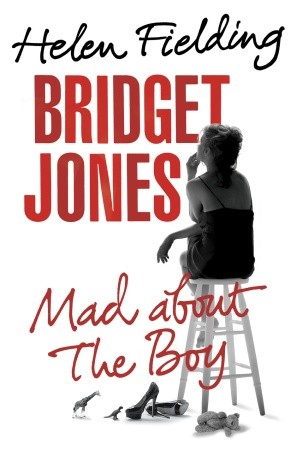
R.I.P. Mark Darcy. 10 Literary Characters Who Died too Soon

When the news broke about the fate of Bridget Jones’ husband, Mark Darcy, in Helen Fielding’s new book Mad About the Boy, I was crushed. I still don’t know if I’m going to read it. It’s not the first time this has happened to me – I may have mentioned this before, but five years later I am still traumatized by the death of Marian at the end of season two of BBC’s Robin Hood. *sigh*

As a little literary therapy I thought I’d put together a list of some other characters we were sad to see go. Of course, I could fill half this list with characters from the Harry Potter series, but I thought that in order to avoid spoilers from new titles, I’d reach back in time to some older classics and the characters we had to let go.


Spoiler alert: although these are well-known classics, if they’re on your reading list you may want to avert your eyes to avoid discovering who meets their untimely death.


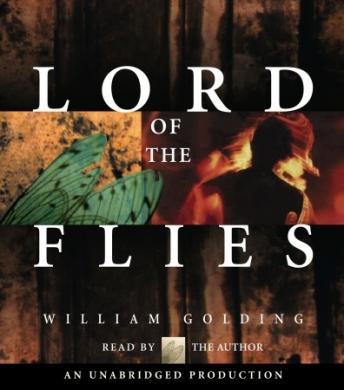
Lord of the Flies

By William Golding

Piggy

Poor Piggy is a social misfit on the island from day one. Overweight with poor eyesight, he is mocked by the other boys and in the book’s climactic scene, he falls victim to Jack’s gang who have crossed the line into all-out savagery.


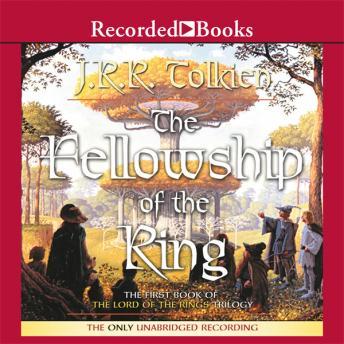
The Fellowship of the Ring

By J.R.R. Tolkien

Boromir

Oh, Boromir. We know you strayed a bit from the straight and narrow in the end and tried to steal the ring from Frodo, but who could blame you? You’re a human after all and we’re notorious for our weak character among those of Middle Earth. At least you redeemed yourself in your final moments.


A Game of Thrones

By George R.R. Martin

Ned Stark

Sean Bean, what is it about you? You really need to learn to avoid sharp objects. This may be a newer title, but unless you’ve been living under a rock you know that the shocking death of Ned Stark was one of the first signs that George R.R. Martin had no intention of going easy on us. And he has stayed true to form ever since. This is one author who can never be accused of being predictable.


Jane Eyre

By Charlotte Bronte

Helen Burns

The death of a child is always heartbreaking. Watching the decline of Jane’s only friend in the deplorable conditions of their boarding school is all the more painful when you think that two of Charlotte Bronte’s own sisters died in similar circumstances. The Bronte sisters’ tragic ends in the care of a cruel headmaster were the inspiration for her portrayal of the kind-hearted Helen.


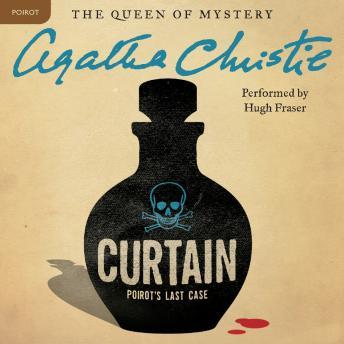
Curtain: Poirot’s Last Case

By Agatha Christie

Hercule Poirot

Well, maybe ‘too soon’ is not the right way to describe this arrogantly lovable detective’s death. He did live to a ripe old age, and accomplished a lot, so it shouldn’t have come as a surprise.  But despite his increasing years, even his creator, Agatha Christie seemed reluctant to let him go. Although she wrote Poirot’s death years earlier, she had it locked in a safe, only to be published when she knew she could write no more.


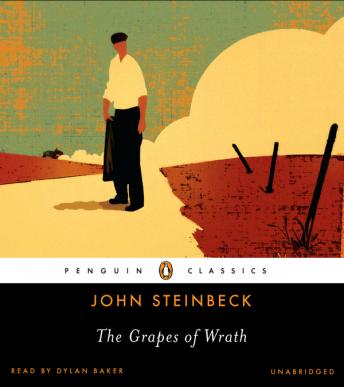
The Grapes Of Wrath

By John Steinbeck

Granma and Granpa Joad

As the Joad family sets off on their trip from Oklahoma to California, Granpa just isn’t ready to leave the land behind. He passes away on the first day of their journey. Later on during the voyage, Granma, who seemed to lose hope after the death of her husband, succumbs to the heat and poor conditions on the road.


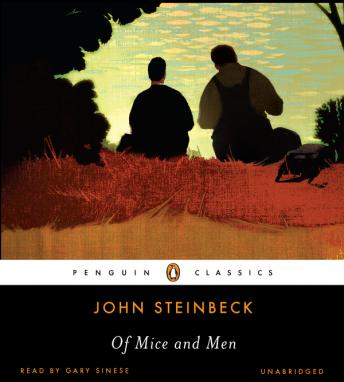
Of Mice And Men

By John Steinbeck

Lennie is a mentally handicapped giant of a man who doesn’t know his own strength and the best friend of George. But when Lennie’s brute strength and limited mental capacities converge with tragic consequences, George knows what he must do to save his friend from a painful death by lynching.


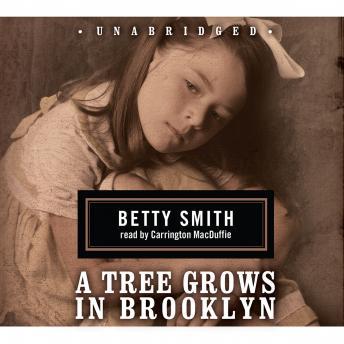
A Tree Grows in Brooklyn

By Betty Smith

Johnny Nolan

Years of hard drinking and poverty take their toll on the Nolan family patriarch and the news of another baby on the way sends him spiraling into depression. His weakened state is no match for the pneumonia that tragically ends his sad life on Christmas day.


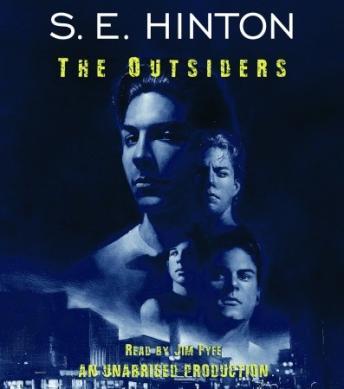
The Outsiders

By S. E. Hinton

Johnny

When Ponyboy and his best friend, Johnny get caught up in gang violence, Johnny’s unthinking action leads to dire consequences. In the end, Johnny redeems himself and dies a hero, but the toll his death takes on his friends has some brutal ramifications.

Think You Know Columbus? Think Again.

Today is Columbus Day. The legacy of Christopher Columbus has been debated for years. While he may have introduced Europeans to the beautiful New World in his search for a passage to the Orient, no one can deny that the consequences for the native population were cruel and devastating.

These five audio books examine various aspects of the life of Columbus – his final, unsung voyage, the aftermath of his arrival, as well as recreating his legendary trip, and questioning who really deserves the credit for discovering America.

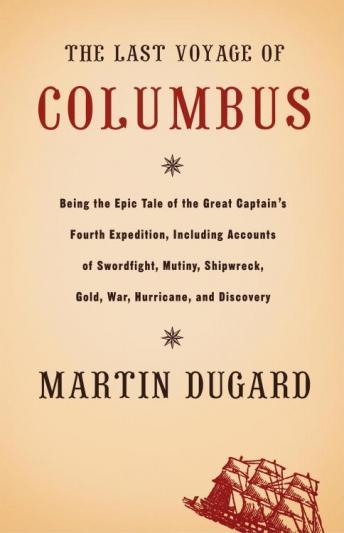
The Last Voyage of Columbus: Being the Epic Tale of the Great Captain’s Fourth Expedition, Including Accounts of Swordfight, Mutiny, Shipwreck, Gold, War, Hurricane, and Discovery

By Martin Dugard

Everyone is familiar with the tale of Columbus searching for a trade route to Asia at the behest of Queen Isabella of Spain and instead discovering the new world. This book covers another attempt of Columbus to reach the Orient, one that doesn’t garner the same attention, but that holds all the elements of a thrilling adventure – shipwreck, mutiny, treachery and desperation.


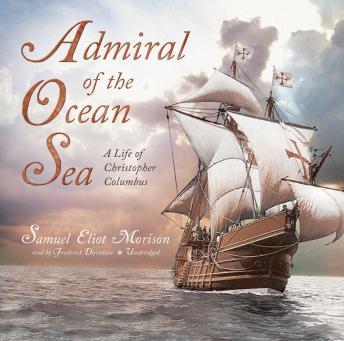
Admiral of the Ocean Sea: A Life of Christopher Columbus

By Samuel Eliot Morison

Morison takes a radical approach to writing this insightful biography of Columbus — he undertakes his own voyage in a ship that approximates the conditions and follows the same routes as the famous Italian explorer.


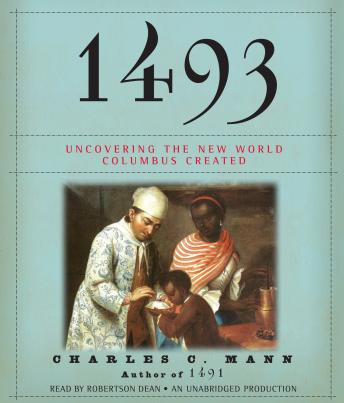
1493

By Charles C. Mann

In 1493, Mann investigates the ensuing results of Columbus’ arrival in the Americas. From foreign species invading — and sometimes  devastating — the New World, to exotic new foods that reshaped the diet of Europeans, Mann illustrates the far-reaching effects that the voyage of Columbus had on our landscapes, our climate, our economy and our politics.


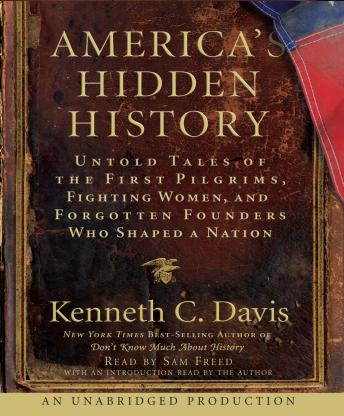
America’s Hidden History

By Kenneth C. Davis

We all know that Columbus brought more that just sailors to the New World. His arrival introduced disease and pests that went on to ravage the native population. In America’s Hidden History, Davis looks at many of the stories behind many well-known stories of the founding of America, including how a herd of parasite-ridden pigs came to be travelling with Columbus in the first place.


FOR KIDS:

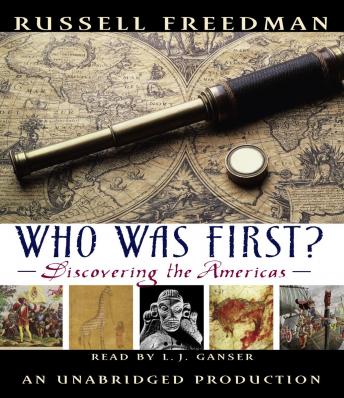
Who Was First?: Discovering the Americas

By Russell Freedman

In this fun and fascinating book, Freedman shows us that contrary to popular belief, Columbus was not the first foreigner to set foot on these shores. Presenting evidence that Vikings and the Chinese pre-dated Columbus by generations, and offering up some unexplained mysteries that point to even more early explorers, Freedman shows that while Columbus may have got the glory, he was actually a latecomer to the New World.

The Five Best Audio Books for Skeptics

October 13 is International Skeptics Day.  We thought we would take a look at books by some of the most well-known critical thinkers of modern times. Richard Dawkins and Christopher Hitchens are just a couple of the authors who take on popular notions about God and creation in these best-selling books that always manage to get people talking – and sometime arguing – about the nature of humanity.

Here are five of the best audio books questioning long held religious beliefs:


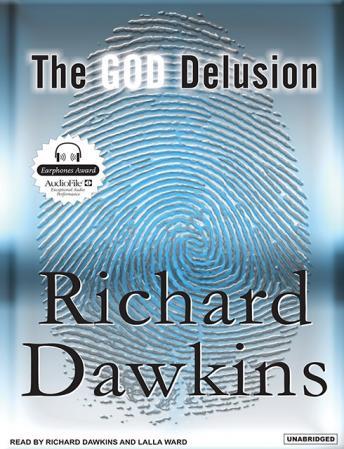
The God Delusion

By Richard Dawkins

Dawkins has been named one of the top public intellectuals in the world. In this book he puts forth his argument against organized religion and the role it has played in starting major conflicts, encouraging bigotry and the systemic abuse of children. Dawkins argues that believing in God is not only irrational and illogical –  the results can actually be deadly.


 The Greatest Show on Earth

By Richard Dawkins

As evolution became accepted as a scientifically proven fact, there arose a new concept among those who were still clinging to the idea of creationism called ‘Intelligent Design.’ It proposed that evolution itself was a creation of God – all part of the plan, if you will. In The Greatest Show on Earth, Dawkins draws on scientific evidence to debunk this idea.


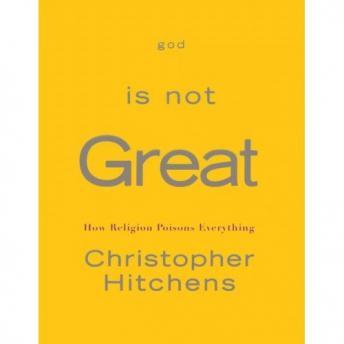
 God is not Great

By Christopher Hitchens

The late Christopher Hitchens takes on religion in his bestseller. Hitchens examines major religious texts and presents the argument that all religions are man-made. He suggests instead a belief system based on science as we move forward.


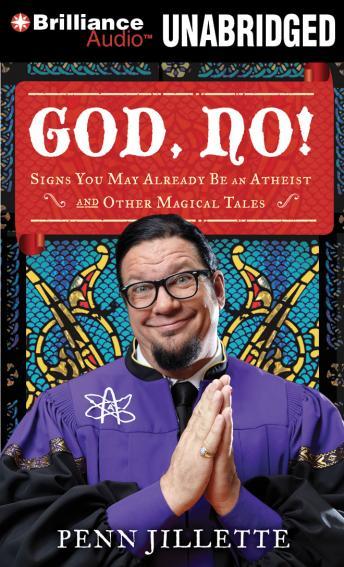
 God, No!

By Penn Jillette

You  may recognize Penn Jillette as one half of the conjuring duo, Penn and Teller. In his funny and provocative book God, No he introduces his own answer to religion – The Penn Commandments. He shares his own experiences as a skeptic and questions the logic of conventional religion.


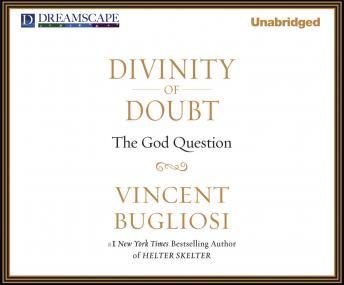
Divinity of Doubt

By Vincent Bugliosi

Vincent Bugliosi takes a more measured approach in his study of religion and its opponents. While Bugliosi questions the notion of God, he always argues against those who deny the existence of a greater power, advocating an acceptance of the limits of our knowledge. Bugliosi proposes that we embrace the mystery of existence, rather than taking a rigid stance on either side of the issue.

Check out Books On the Nightstand

It’s no secret we love listening to audiobooks. Of course with so many excellent titles available, sometimes it’s hard to make up our minds! That’s why we’re so pumped to announce that Audiobooks.com is now a sponsor of one of the finest podcasts available for booklovers, Books on the Nightstand. When we’re looking for our next read, we find there’s no better source for recommendations and information on books, authors and publishing.

Every week, hosts Michael Kindness and Ann Kingman invite listeners into their conversations about what’s happening on the book scene. Publishing industry insiders, these two friends and colleagues share their unique perspectives on what they’re reading, what writers are writing, and which titles are generating buzz.

This award-winning podcast is the perfect way to keep up with all things book-related. Visit iTunes to download the podcast, or stream directly from the Books on the Nightstand website.

Listen into illuminating conversations about books and reading at Books on the Nightstand.

‘I Am Malala’ Audio Book Review and Excerpt

‘I Am Malala: The Girl Who Stood Up for Education and Was Shot by the Taliban’

By Malala Yousafzai with Christina Lamb

Narrated by Archie Panjabi

Listen to an excerpt:

https://www.youtube.com/watch?v=dp-ZGbT8ENo

On October 9, 2012 at the age of 15, Malala Yousafzai was shot in the head by a Taliban gunman as she rode the bus home from school. Her crime in the eyes of the Taliban? Speaking out for the rights of young women like herself to receive an education. Malala’s shooting shocked the world. Now, less than one year later, this incredible young woman has published an inspiring account of her life, her family, her near-fatal brain injury and her struggle to recover and overcome.

‘I Am Malala’ is at once heartbreaking and uplifting. It’s the story of a girl who has fought for her entire young life to improve conditions for girls in her homeland but who now cannot return to the land that she loves. It’s the story of a father who tried to make a better future for his daughter and now blames himself for the injury that nearly took her life. And it’s the story of a land at odds with itself, torn apart by Taliban militants aiming to impose their rule upon peace-loving Muslims who simply want to live their lives in this rugged yet beautiful corner of the East.

From the very start of ‘I Am Malala’, Malala paints a picture of life in the part of Pakistan where she grew up as a paradise. Although it may not have many of the luxuries that we in the West take so much for granted, when Malala describes the Swat Valley near the Pakistan-Afghanistan border you get a picture of lush plains set among mountains in an area once inhabited by some of the first Buddhists, and boasting historic Buddha statues that date back thousands of years.

In addition to the beautiful surroundings in which she grew up, Malala was blessed in a much more profound way. In a land that values sons over daughters, Malala was fortunate to have two parents who didn’t measure her worth based on her gender. From the day she was born, Malala’s father, a teacher dedicated to educating the youth in his district, treasured his daughter and raised her to think for herself. With the support of her father, Malala developed a thirst for knowledge and was driven to succeed, always placing first or second in her class.

Malala also covers the difficult history of the region. The tragic events of 9/11 shocked Malala’s community as it did the rest of the world, but it was not long before the conspiracy theories began to circulate – that it was an act of the U.S. government, or a plot by ‘the Jews’. As the tensions in neighboring Afghanistan escalated, the Swat Valley soon felt the effects. The power of Maulana Fazlulla, the local Taliban leader, began to grow and it was announced in 2009 that girls could no longer attend school.

“If one man can change everything, why can’t one girl change it?”

The book is narrated by Archie Panjabi, best known for her role in ‘Bend It Like Beckham’ (a film that gets a mention in the book.) Panjabi delivers the highs and lows of Malala’s young life with the perfect combination of hope and gravity. Recounting the harrowing details of Malala’s attack, Panjabi’s straightforward manner is without melodrama, capturing the severity of the situation yet reassuring the listener with her level tones. Malala herself reads the prologue, an uplifting introduction, demonstrating just how far this courageous girl has come in 12 short months.

‘I Am Malala’ is an incredible book from a teenage author, but considering that Malala has been a media figure since the age of 11, when she began writing an anonymous blog for the BBC detailing life for a young girl under the Taliban, it is hardly surprising that she is such an insightful, inspirational writer. I will admit – I began listening to this book with some apprehension about the subject matter. I was afraid that I would leave this story feeling depressed and hopeless. My expectations couldn’t have been further from the truth. I walked away from this book feeling inspired by the triumphant story of this girl and her father who defied the Taliban and lived to tell the tale, spreading her message of hope across the world. The ultimate tragedy you take away is that Malala and her family are now forced to live away from the land that they love and have worked so hard for. But Malala swears that she will return to Pakistan one day – and after reading her book you believe that there is nothing this young woman can’t accomplish.